




Rep. Estes Introduces Legislation to Delay Efficiency Adjustment; Benefiting Kansas Doctors
Washington,
February 12, 2026
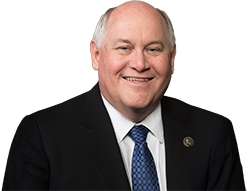
Congressman Ron Estes (R-Kansas) introduced legislation, H.R. 7520, that addresses the efficiency adjustment in the Medicare Physician Fee Schedule by delaying the adjustment to ensure it is more targeted and thoughtful. Currently, the CY 2026 Medicare Physician Fee Schedule Final Rule introduced a new “efficiency adjustment” policy, and this mandate assumes perpetual efficiency gains in physician services, leading to recurring reimbursement reductions.
The policy reduces work Relative Value Units (RVUs) and intra-service time for all non-time-based codes by 2.5% in 2026, with additional cuts every three years. CMS assumes services are becoming faster, yet studies show 90% of procedures had the same or longer operative times in 2023 compared to 2019.
Additionally, the 2.5% cut is a flat rate based on general economy-wide labor productivity rather than actual clinical work or direct patient complexity. Because many physician employment contracts use work RVUs to calculate pay, these cuts will decrease compensation and threaten patient access.
Lastly, this cut occurs as practice operational costs have increased 59% since 2001, resulting in a 33% decline in inflation-adjusted physician pay.
Rep. Estes legislation addresses concerns voiced by Kansas Doctors and National Doctors groups regarding this efficiency adjustment which calls for a delay while we work through how to ensure the adjustment is targeted and thoughtful to physicians nationwide.
“Paying physicians properly is one of the only ways to ensure continued access and quality care for patients nationwide. As your representative in Congress, it is my duty to respond to concerns and fight for our Kansas Doctors such as the concerns raised with this efficiency adjustment,” Rep. Estes said. “Our physicians in Kansas and across our country are committed to the health and wellbeing of all Americans, and I will continue to fight in their best interest in Washington.”
“Doctors are overwhelmed as it is. They’re suffering from record rates of burnout while spending more time filling out paperwork than with their patients. Asking them to work even faster without properly understanding what actually affects procedure times doesn’t make sense,” Rep. Tom Suozzi said. “This bipartisan bill delays an unvetted and potentially harmful policy from taking effect too haphazardly. Let’s take care of the people who take care of us and make sure they have the time, tools, and support to provide quality care for their patients."
“The 2.5% reduction to work Relative Value Units (RVUs) that went into effect on January 1 is detrimental to surgeons’ ability to provide quality care. Recent research shows that operative times have increased on average by 3% since 2019 as patient complexity has risen. This critical legislation will put a stop to the flawed across-the-board reduction until CMS is able to provide data on why it is necessary to do such an adjustment.
“The Efficiency Adjustment Delay Act builds on Congress’ recognition that cuts fuel consolidation to the detriment of physicians and their patients,” Alexander A. Khalessi, MD, MBA, Chair of the AANS/CNS Washington Committee for Neurological Surgery said. “It helps ensure any future changes to work RVUs are grounded in empirical evidence and stakeholder input. We applaud Representatives Estes and Suozzi for their leadership and urge Congress to advance this legislation.”
You may click HERE to read the full legislation.
You may click HERE to read a letter from over 30 organizations supporting this legislation.
### |